Special View
a media platform for blind people built to digital accessibility standards
Special View is an inclusive online environment designed for people with different visual abilities. It brings together people with visual impairments, their families and professionals, making information, opportunities and support easier to access.
Challenge
We needed to design and develop a new portal for people with visual impairments, their families and professionals working in the field of inclusion, bringing together media, an events calendar and a navigator for courses, grants, support programs and other useful resources.
We were responsible for the architecture, UX, visual concept, prototyping and development of the portal, keeping accessibility at the center of every stage. It had to work well with a keyboard and screen reader while staying clear and expressive for sighted audiences.
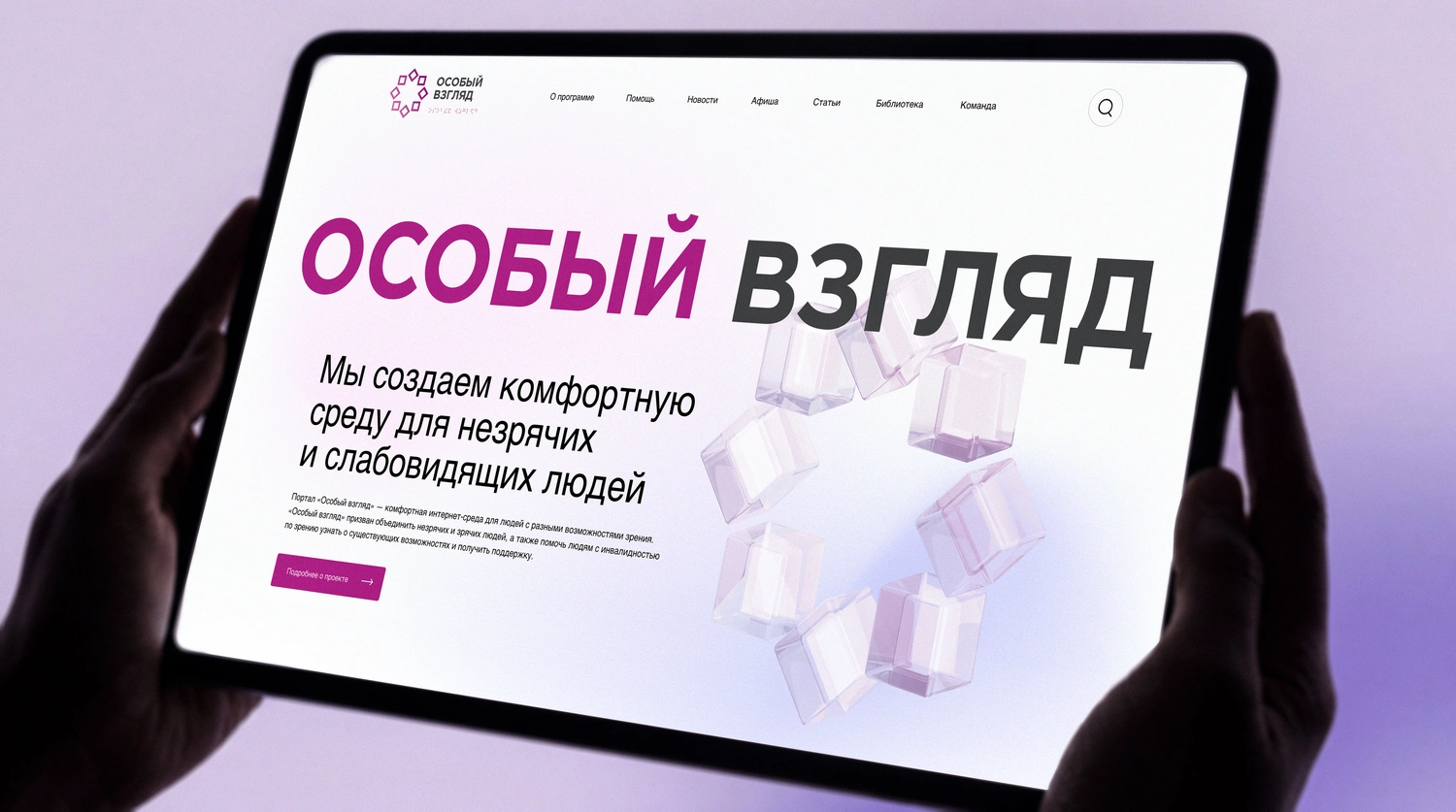
The image shows the main screen of the Special View portal.
Accessibility as the Foundation
Imagine that a website is something you do not look at, but listen to: you perceive the voiced elements in sequence and control them with a keyboard.
This scenario guided the structure, navigation and interface components. For Special View, accessibility became the foundation of the project, not a separate version of the website or a formal low-vision mode.
We discussed key scenarios with blind users and testers in advance, then covered the topic in more detail in the journal article “How blind people see websites”.
How the Site Sounds
Try not looking at the interface for a minute and simply listen to it. We asked blind colleagues to record their work with a screen reader on two websites: the Special View portal, where digital accessibility was considered at every design stage, and a typical media website.
Website Designed with Digital Accessibility
Typical Media Website
 Vadim Smirnov — creative director at OKC.Media
Portal Architecture
The portal content is organized into three main areas, each solving a specific user task: learn something new, find a relevant event or get access to useful opportunities and services.
Media
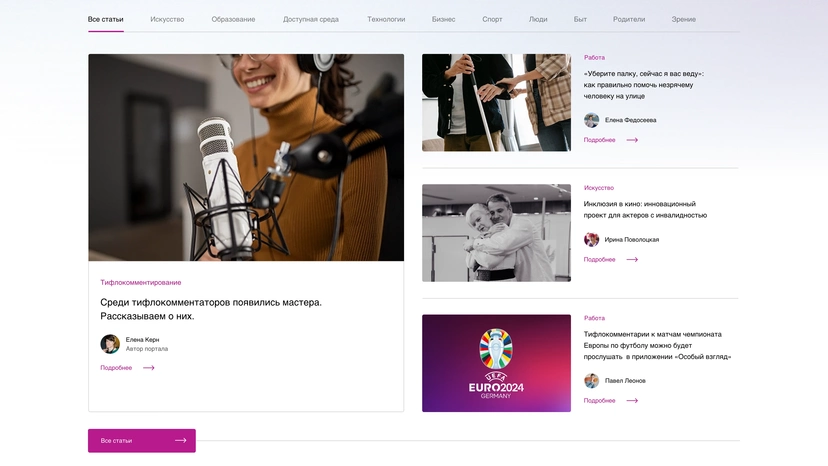
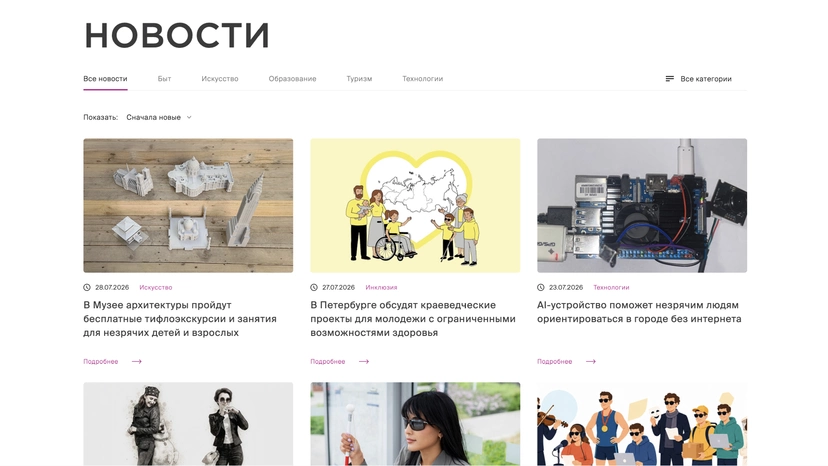
The editorial section includes articles, news, interviews, stories and reference materials. Publications are connected through categories, tags and authors, so one article can lead to related materials, relevant events or an author page.
Events
The event calendar helps users find activities by date, topic, city and participation format. We migrated a large event archive from the old website, preserved past events and built them into the shared portal structure.
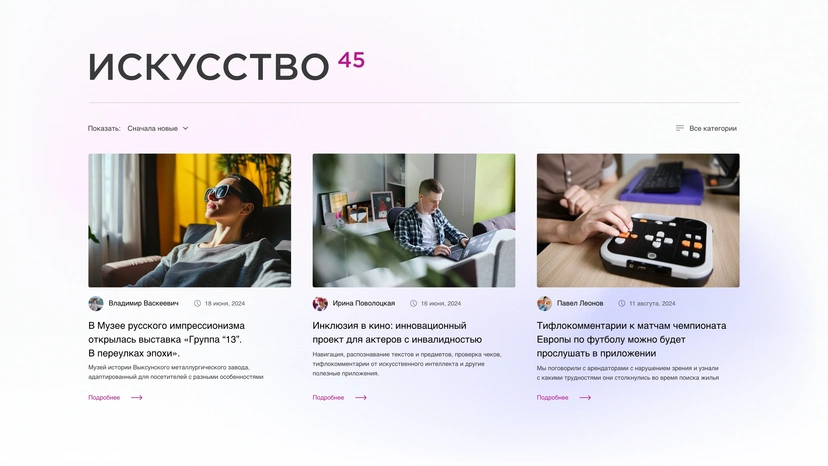
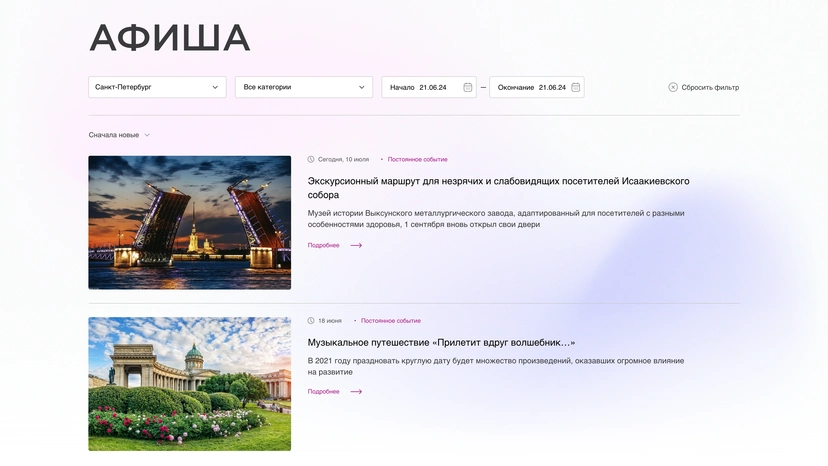
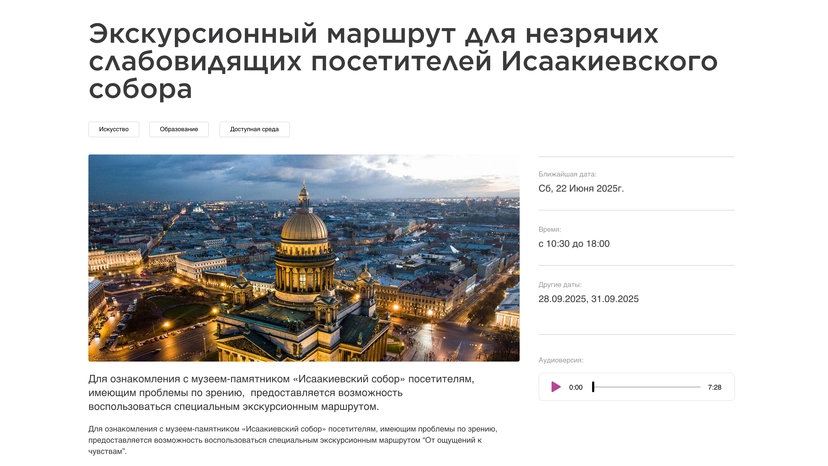
Resources
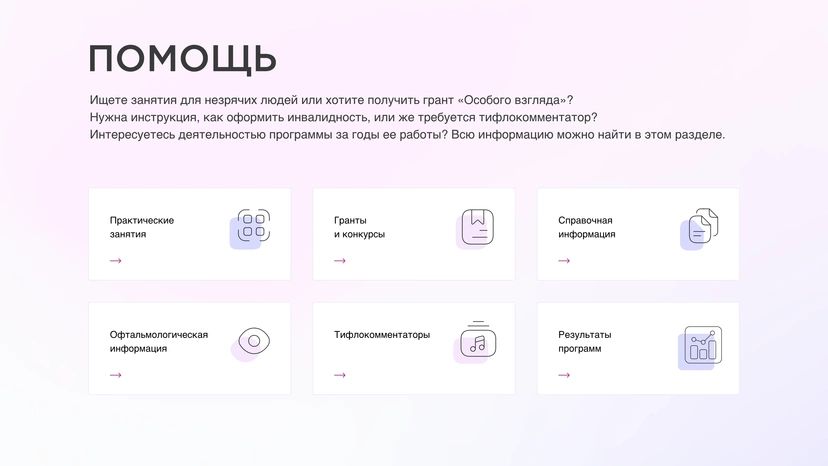
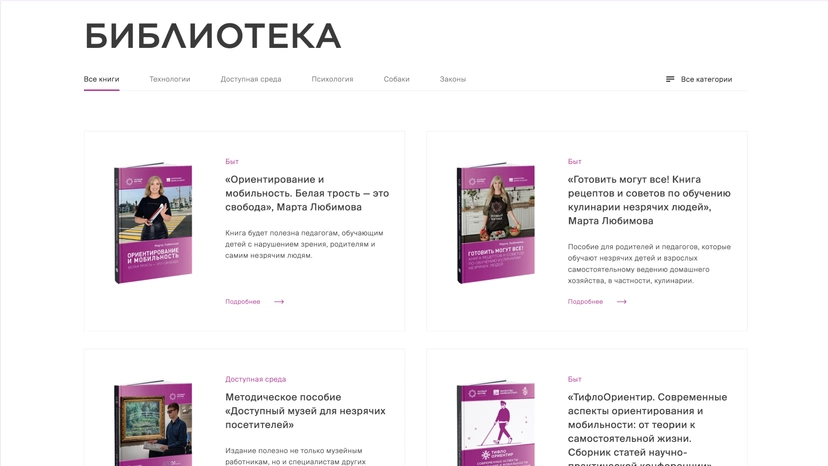
This section brings together educational programs, grants, reference materials and links to services for people with visual impairments.
Media, events and useful resources do not exist as isolated sections. All materials are connected by a shared system of categories, tags, authors and geography.
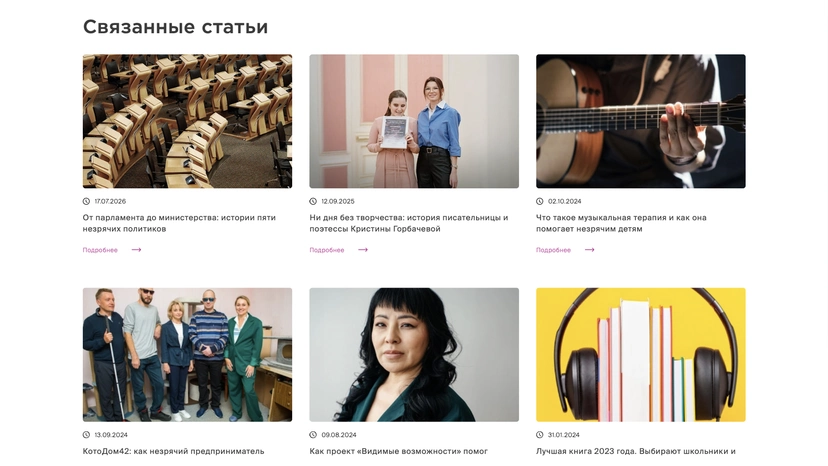
As a result, a user can move from an article to an event, find other publications by the same author or browse materials on a topic they care about. This structure helps people navigate a large body of content not only through the main menu or search, but also through meaningful connections between pages.
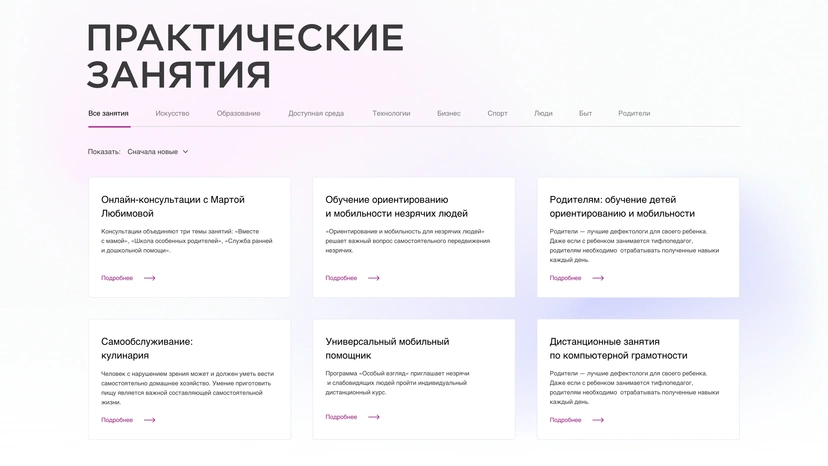
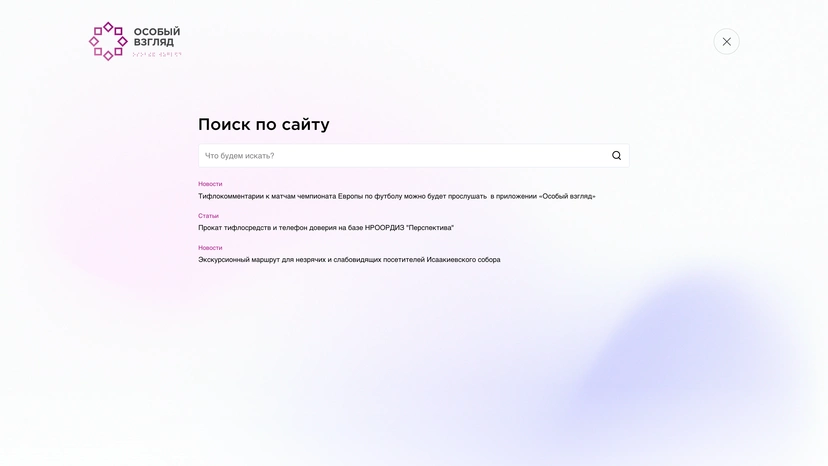
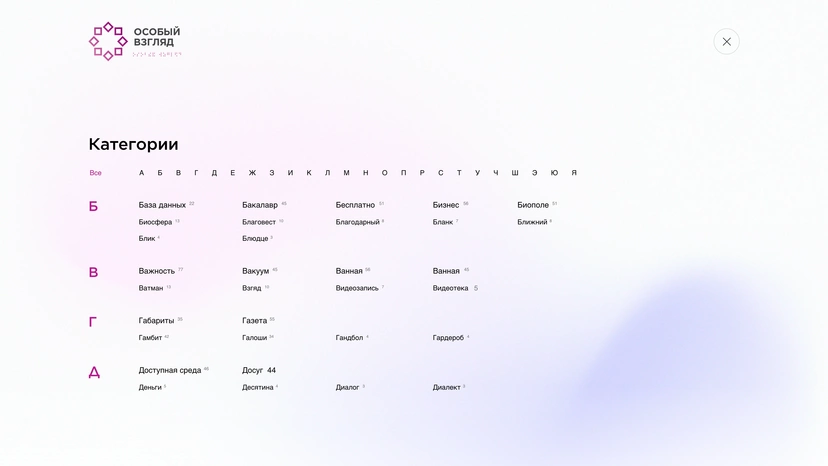
Scale and Community
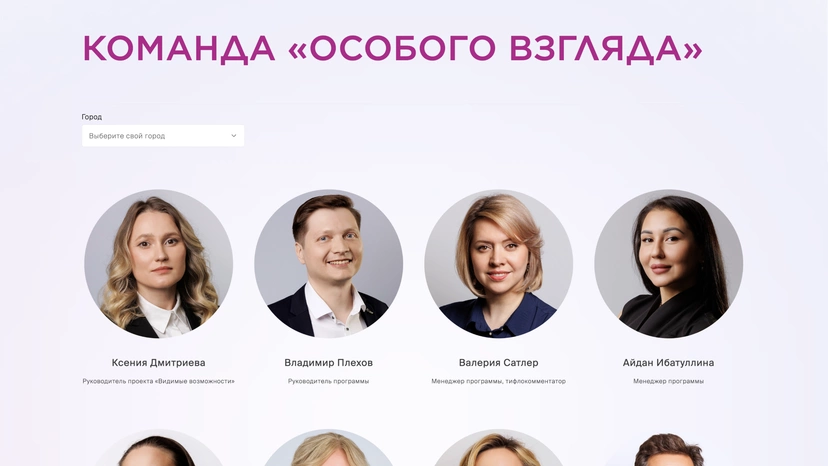
One of the client's goals was to show the scale of the project and the people who make it happen.
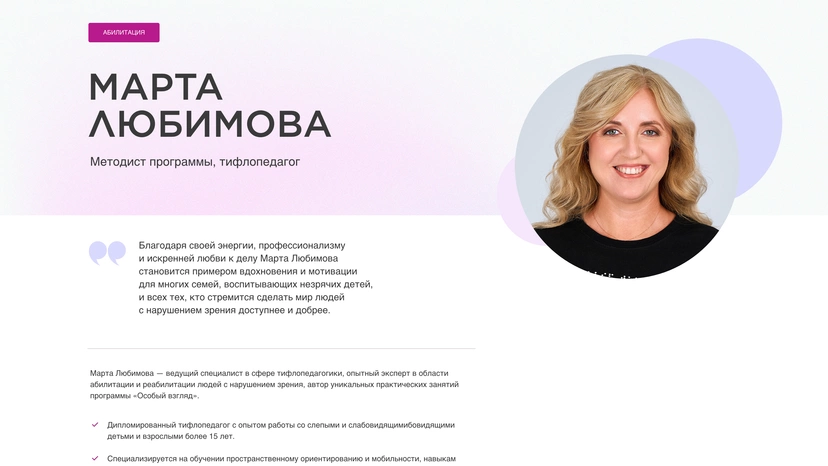
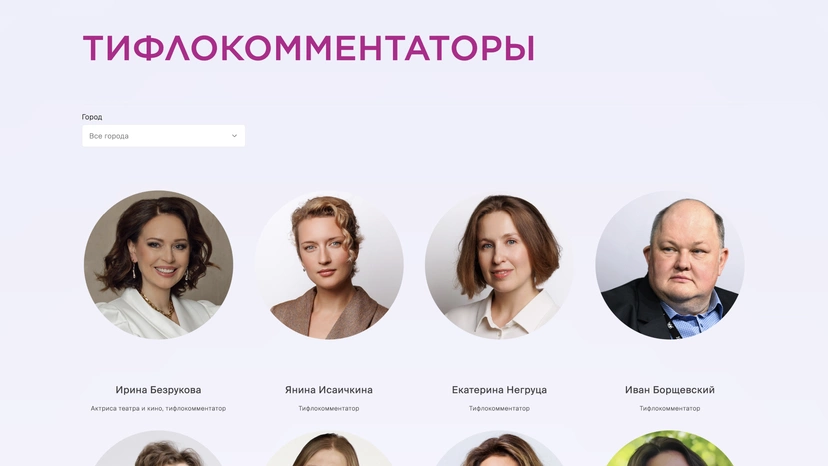
That is why the website now has an expanded team section. It includes not only Special View staff, but also authors, ambassadors, audio describers and other project participants.
Each author has a dedicated page with a biography, contact details and all related publications and events.
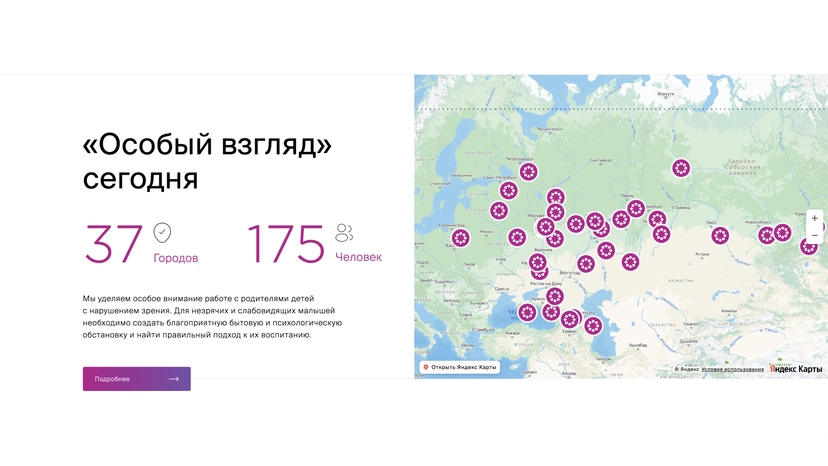
A map of Russia shows the project's geography and cities of presence. The same information is also available as a structured list, so it is not limited to a visual format.
Visual Concept
Accessibility should not turn the portal into an impersonal utility interface.
We wanted to create a visual system that:
- reflects the meaning of the project;
- develops the recognizable image of Special View;
- stays clean and clear without making content work more complicated.
On the main screen, the Special View name gradually appears from a blurred state. Geometric elements in the background react subtly to cursor movement.
We also developed a glass-like
The video shows the visual system of the Special View portal.
Personalized Recommendations
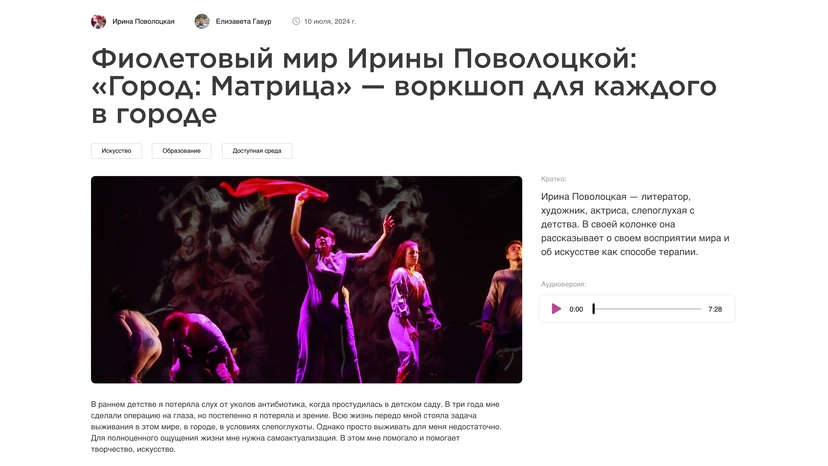
The portal takes into account which content categories a user engages with most often and adjusts the order of recommendations accordingly.
Personalization helps users find relevant articles, news and events faster inside a large content archive. At the same time, it does not limit access to other materials or create a closed personal feed.
Editorial Tools
In addition to the user-facing part, we developed tools that simplify the editorial team's day-to-day work.
The system automatically processes materials added through the WYSIWYG editor:
- removing fixed image dimensions;
- moving images inserted from cloud services into the website's local storage;
- letting editors use ready-made snippets for publication layouts.
This post-processing reduces manual work and lowers the risk that a new material will break page responsiveness or accessibility.
Design and Development
During the design stage, we prepared an interactive prototype with 23 screens covering the portal's key user scenarios and functional modules.
Technologies
- Content management system: 1C-Bitrix.
- Frontend: Vue, Vite, TypeScript.
- Integrations: DaData, Sendsay.
Results
We created a single portal that blind and sighted users can use without a separate specialized version.
 Vladimir Plekhov — head of the Special View program
-
700,000+
visitors per year
-
6,000+
articles and news items published on the portal
-
WCAG + GOST
the portal is certified for compliance with Russian GOST requirements and WCAG principles
-
172
project participants: authors, ambassadors and audio describers
-
36
Russian regions covered by the project's offline programs
-
Testing
key scenarios were tested with blind users at different stages of development